

Acupuncture Insomnia treatment has received growing research attention as a complementary approach for people experiencing sleep difficulties. Some clinical studies and systematic reviews suggest that acupuncture may help improve certain measures of sleep, although the quality of evidence varies and more high-quality research is still needed.
Insomnia is more than simply having one bad night of sleep. When difficulty falling asleep, staying asleep, waking too early, or experiencing poor-quality sleep happens repeatedly, it can affect concentration, mood, energy levels, and everyday activities. For some people, sleep problems may also occur alongside stress, chronic discomfort, hormonal changes, or other health conditions.
Acupuncture insomnia treatment is one complementary approach that some people explore as part of a broader sleep-support strategy. Research has found potential improvements in sleep quality and insomnia-related measures in some acupuncture studies, while health authorities also emphasize that acupuncture should not automatically replace established treatments such as cognitive behavioral therapy for insomnia (CBT-I).
In this article, we explore 7 potential benefits of Acupuncture Insomnia treatment, what current research says, how acupuncture sessions may work, and what you should consider before beginning treatment.
What Is Insomnia?

Insomnia is a sleep problem characterized by difficulty falling asleep, difficulty staying asleep, waking earlier than desired, or experiencing sleep that does not feel restorative.
Someone with insomnia may spend a long time trying to fall asleep at night, wake repeatedly during the night, or wake much earlier than planned and struggle to return to sleep. The following day, they may feel tired, have difficulty concentrating, or feel less productive.
Occasional poor sleep can happen to almost anyone. Stress, travel, changes in routine, late-night screen use, caffeine, illness, or temporary life changes can all affect sleep. However, persistent sleep difficulties deserve greater attention because they may have an underlying cause that needs to be identified.
Sleep problems can also occur together with other conditions. For example, people experiencing chronic pain, anxiety, hormonal changes, or certain medical conditions may also report difficulties sleeping.
For this reason, improving sleep is not always about simply finding something that makes you feel sleepy. A healthcare professional can help identify possible contributing factors and determine whether a specific sleep disorder or another health condition may be involved.
7 Potential Benefits of Acupuncture Insomnia Treatment
1. Acupuncture Insomnia May Help Improve Overall Sleep Quality
One of the main reasons people consider acupuncture for insomnia is to support better overall sleep quality.
Sleep quality is not determined only by how many hours you spend in bed. You may spend seven or eight hours in bed but still wake up feeling tired if your sleep is frequently interrupted or does not feel restorative.
Several acupuncture studies have investigated sleep quality using standardized tools such as the Pittsburgh Sleep Quality Index (PSQI). A systematic review and meta-analysis published in 2021 reviewed 24 randomized controlled trials and found evidence suggesting acupuncture may have beneficial effects on insomnia-related sleep outcomes. However, the researchers also highlighted methodological limitations and differences between studies.
More recent research has continued to investigate acupuncture for insomnia. For example, a 2024 systematic review and meta-analysis specifically examined electroacupuncture and insomnia, evaluating randomized clinical trials that compared electroacupuncture with approaches such as sham acupuncture, no treatment, usual care, or conventional acupuncture.
This means acupuncture may be considered by some people as part of a broader approach to improving sleep quality. However, individual responses can differ, and acupuncture should not be presented as a guaranteed solution for insomnia.
At Iswanah, an acupuncture session can begin with a consultation so that the practitioner can understand your symptoms, sleep pattern, general health history, and concerns before discussing whether acupuncture may be appropriate for you.
2. May Support Falling Asleep More Comfortably

For some people with insomnia, the biggest challenge is not staying asleep but actually falling asleep.
You may go to bed at 10:00 PM but remain awake for another hour or two. You may constantly think about work, family responsibilities, tomorrow’s schedule, or other concerns. Over time, the bedroom itself can become associated with frustration because you expect another difficult night.
Research into acupuncture insomnia has examined several sleep-related outcomes, including sleep onset and overall sleep quality.
Although the evidence is not strong enough to say that acupuncture will make everyone fall asleep faster, some studies suggest acupuncture insomnia may have a role in improving insomnia symptoms. Research also indicates that results can vary according to treatment approach, acupuncture points, treatment frequency, and the characteristics of the people being studied.
This is important because insomnia is not the same for everyone.
One person may have difficulty falling asleep, while another may fall asleep quickly but wake several times during the night. Someone else may wake at 4:00 AM and be unable to return to sleep.
A personalized consultation can therefore be useful before deciding whether acupuncture is appropriate.
3. May Help Support More Consistent Sleep Patterns
Another potential benefit of acupuncture insomnia is supporting improvements in overall sleep patterns.
A healthy sleep pattern involves more than simply achieving a certain number of hours. Regular sleep and wake times, fewer nighttime interruptions, and a consistent bedtime routine can all contribute to healthier sleep habits.
Research into acupuncture and insomnia has investigated outcomes such as sleep duration, sleep efficiency, sleep quality, and insomnia severity. Some systematic reviews have reported improvements in certain measures, although the findings are not consistent across every study.
A 2023 systematic review and meta-analysis examining electroacupuncture for secondary insomnia found improvements in some sleep-related outcomes compared with control groups, including an improvement in PSQI scores. However, the researchers concluded that more high-quality studies were needed to confirm the findings.
This highlights an important point: acupuncture should be viewed as one possible component of a comprehensive sleep-support plan rather than a standalone guarantee of better sleep.
Alongside any complementary treatment, maintaining a regular bedtime and wake-up time can help establish a more consistent sleep routine.
4. May Support Relaxation Before Bedtime
Stress and difficulty relaxing can make it harder to transition from being awake and active to preparing for sleep.
After a busy day, your body may be physically tired while your mind remains active. You may continue thinking about unfinished work, financial responsibilities, family matters, or tomorrow’s tasks even after getting into bed.
Acupuncture is sometimes used as a complementary approach for relaxation and wellbeing. Some people report feeling calm or relaxed during or after an acupuncture session.
However, it is important to distinguish personal experiences from strong clinical evidence. Current evidence for acupuncture specifically treating insomnia remains limited compared with established approaches such as cognitive behavioral therapy for insomnia.
The National Center for Complementary and Integrative Health (NCCIH) notes that acupuncture research for insomnia suggests possible benefits, but many studies have been small and of low quality.
For people dealing with persistent insomnia, relaxation strategies can be incorporated into a wider sleep routine.
These may include:
- Keeping a consistent sleep schedule
- Reducing bright light exposure before bedtime
- Avoiding caffeine close to bedtime
- Creating a quiet and comfortable sleeping environment
- Practising relaxation techniques
- Limiting stimulating activities before bed
These habits can work alongside professional care rather than replacing it.
5. May Help Improve Sleep-Related Quality of Life
Poor sleep can affect much more than nighttime.
When someone repeatedly sleeps poorly, they may wake up feeling tired, struggle to concentrate at work, become less motivated to exercise, or find everyday tasks more difficult.
For example, someone who normally enjoys spending time with family may feel too exhausted after a poor night’s sleep. Another person may find it harder to focus during meetings or complete work efficiently.
Because insomnia can affect daytime functioning, improving sleep quality may potentially have broader benefits for daily wellbeing.
Research on acupuncture for insomnia has examined not only sleep-related measures but also symptoms and quality-of-life-related outcomes in some populations.
A 2024 systematic review of acupuncture for insomnia in breast cancer patients, for example, investigated outcomes including sleep quality, insomnia severity, sleep onset latency, wake after sleep onset, total sleep time, and sleep efficiency.
However, evidence from specific patient groups should not automatically be generalized to everyone with insomnia.
The possible effect of acupuncture can depend on the underlying cause of sleep difficulties, overall health, treatment approach, and other factors.
6. May Be Considered as a Complementary Option When Sleep Problems Occur With Other Symptoms
Insomnia does not always happen by itself.
Some people experience sleep difficulties alongside chronic pain, muscle tension, stress, neurological conditions, hormonal changes, or other health concerns.
When sleep problems occur together with another condition, treatment may need to consider the overall picture rather than focusing only on sleep.
For example, someone experiencing ongoing discomfort may find it difficult to sleep comfortably at night. Another person may have sleep difficulties after experiencing a major change in their daily routine.
Acupuncture has been investigated in different populations and circumstances. Research into secondary insomnia, for example, has explored electroacupuncture in people whose sleep problems were associated with other conditions. A systematic review involving 13 randomized controlled studies and 820 participants reported improvements in some outcomes, while also emphasizing the need for further high-quality research.
This does not mean acupuncture treats every underlying condition or that it should replace medical treatment.
Instead, acupuncture may be considered as a complementary approach for selected individuals after an appropriate assessment.
If insomnia is accompanied by significant pain, breathing problems during sleep, severe daytime sleepiness, depression, medication changes, or other concerning symptoms, it is important to discuss these issues with a qualified healthcare professional.
7. Provides a Non-Drug Complementary Approach to Sleep Support
Some people prefer to explore non-drug or complementary approaches as part of their overall sleep management.
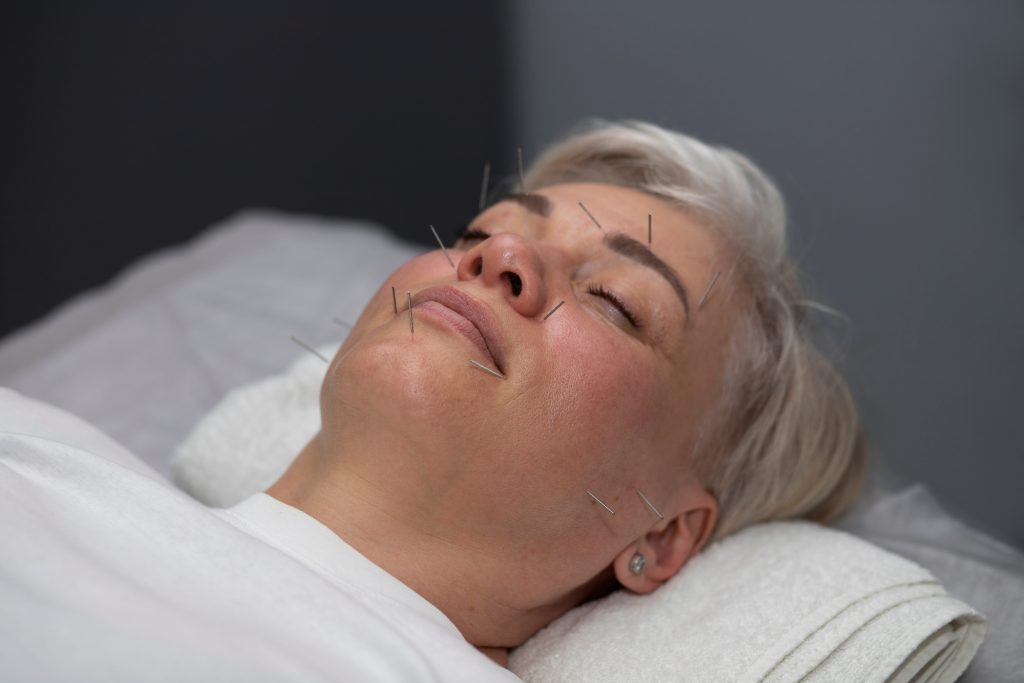
Acupuncture uses very fine needles inserted at specific points on the body. Depending on the treatment approach, practitioners may select different acupuncture points based on the individual’s symptoms and assessment.
One reason acupuncture attracts interest is that it does not rely on taking a sleeping medication during the session.
However, “natural” or “non-drug” does not automatically mean that an approach is suitable for everyone. Acupuncture still needs to be performed appropriately, using sterile needles and proper technique.
NCCIH states that relatively few complications have been reported in acupuncture research, but improper treatment or nonsterile needles can result in serious complications, including infection or injury.
For this reason, choosing a qualified practitioner and an appropriate healthcare setting is an important part of considering acupuncture treatment.
How Does Acupuncture for Insomnia Work?
The exact mechanisms through which acupuncture may influence insomnia are still being studied.
From a modern research perspective, studies have investigated possible effects involving the nervous system, stress responses, pain perception, and other physiological processes. However, researchers continue to study how different acupuncture approaches may influence sleep.
From the perspective of traditional acupuncture practice, practitioners may assess the individual’s symptoms and overall condition before selecting acupuncture points.
Treatment may therefore differ from one person to another.
For example, two people may both report “insomnia,” but their experiences can be very different. One person may have difficulty falling asleep because of stress, while another may wake repeatedly because of discomfort.
This is why an individualized assessment can be useful.
Rather than assuming that one acupuncture point or one treatment protocol works for everyone, a practitioner can consider the individual’s symptoms and health background when planning treatment.
What Happens During an Acupuncture Insomnia Treatment Session?
If you are considering acupuncture insomnia treatment for sleep problems, you may wonder what a typical session involves.
The process generally begins with a consultation. The practitioner may ask questions about your sleep schedule, how long you have experienced sleep difficulties, how often you wake during the night, your daily routine, and other relevant health information.
You may also be asked about medications, existing health conditions, previous treatments, and any symptoms that occur alongside your sleep problems.
After the assessment, the practitioner can determine whether acupuncture may be appropriate and explain the proposed treatment approach.
During acupuncture, very fine needles are inserted into selected acupuncture points. Depending on the treatment plan, the practitioner may use manual acupuncture or other acupuncture techniques.
Some people describe acupuncture as producing a mild sensation at the treatment area, while others experience very little discomfort.
The number of sessions required can vary because there is no single treatment schedule that applies to every person with insomnia.
Factors such as the duration of symptoms, overall health, age, lifestyle, and the underlying contributors to sleep problems can all influence the treatment plan.
Acupuncture Insomnia Treatment: How Many Sessions Are Needed?
There is no universal number of acupuncture insomnia sessions that guarantees improvement in insomnia.
Research studies have used different treatment frequencies, treatment durations, and acupuncture protocols. A 2025 systematic review specifically investigated the relationship between acupuncture dosage and outcomes in primary insomnia and included 56 studies, highlighting how treatment frequency and overall dosage can vary between research protocols.
This means you should be cautious about claims promising that insomnia will disappear after a fixed number of sessions.
Instead, treatment should be monitored based on your symptoms and response.
A qualified practitioner may recommend a treatment schedule and review your progress over time. Keeping track of bedtime, wake-up time, nighttime awakenings, and how rested you feel during the day can also help you and your healthcare provider understand whether your sleep pattern is changing.
Conclusion

Getting enough quality sleep is an important part of maintaining your daily energy, focus and overall well-being. If you regularly have difficulty falling asleep, wake up frequently during the night, or often feel tired despite getting enough time in bed, it may be worth exploring suitable options to support better sleep.
As discussed throughout this article, Acupuncture Insomnia treatment may help support sleep quality and improve certain sleep-related symptoms for some individuals. However, everyone’s sleep concerns are different, and acupuncture may not be suitable for every person. A proper consultation and individual assessment can help determine the most appropriate approach based on your symptoms and health condition.
At Iswanah Healthcare, our team provides acupuncture services with an individualised approach. Before starting treatment, you can discuss your sleep concerns and other symptoms with our practitioner so that your condition can be assessed and the appropriate treatment approach can be explained to you.
If you are interested in exploring acupuncture insomnia treatment for your sleep concerns, visit the Iswanah Healthcare branch nearest to you and speak with our team for a consultation.
🏠 Iswanah Healthcare Branches:
📍 Batu Caves
📍 Shah Alam
📍 Senawang
📍 Rawang
📍 Bangi
📍 Kota Damansara
📍 Nilai
📍 Kajang
Don’t let ongoing sleep difficulties continue to affect your daily routine without seeking the right guidance. Click link below to discuss your sleep concerns and find out whether acupuncture may be suitable for you.